
This photo isn’t real.
Prompt: “A photo of an 70 year old woman, her face sad and tears rolling down her cheeks, holding a young infant closely outside a house devastated by an earthquake in a conflict zone. The environment is a scene of ruin and despair, indicating the aftermath of a natural disaster. The backdrop suggests a city in a far away country, with a somber, dark cloud sky enhancing the emotional weight of the scene. The expression of the grandmother conveys loss. The atmosphere is thick with sorrow, inviting empathy and evoking a strong emotional response, compelling for humanitarian purposes. Life like photograph. Dirt on lens.”
No Hidden AI
Because our work depends on people believing us.
Humanitarian organisations rely on a fragile foundation: belief.
Every day, we ask the public to believe us.
To believe that a crisis is happening.
To believe that people need support.
To believe the stories we tell.
Our relationship with donors is incredibly valuable.
And incredibly fragile.
Hidden generated AI content, used in fundraising, risks destroying the very credibility we depend on.
🎬 This video isn’t real either.
Every scene in this video was made with AI. So was the song. So was the voiceover.
It may seem authentic. Yet none of it is real.
Right now, there’s no guardrails within our sector to stop artificial content being presented as truth.
That’s a problem. Why? Because using undisclosed fake content destroys the public trust our sector depends on.
The No Hidden AI campaign isn’t asking organisations or regulators to ban the use of AI content - but it is demanding transparency when it’s used.
We can now instantly create photographs and videos of people who don't exist.
We can create scenes that never existed.
Crises that never happened.
Voices that never spoke.
Perhaps sometimes that's useful (this campaign isn’t about the ethics of how AI content is made).
But the moment we start discreetly blurring the line between what actually happened and what we generated, we risk people not believing us.
When the public stops trusting what humanitarian organisations show them, everybody loses.
The No Hidden AI campaign exists to safeguard public trust.
‘No Hidden AI’ Theory of Change
Building a coalition of early adopters
We secure pledges from progressive humanitarian leaders - including prominent guests from Causes.Show episodes - to adopt the No Hidden AI standard immediately.
By uniting the UK’s most trusted international response charities, we prove that upfront transparency is practical, operational, and ethically essential right now.
Lifting voices of sector professionals
We gather thousands of signatures from humanitarian sector professionals on an open letter to the Charity Commission Chair, Dame Julia Unwin and others.
This demonstrates undeniable, professional-led consensus that hidden AI-generated content is viewed as an existential risk for the entire sector.
Pressuring the powerful
We present both the leadership pledge and open letter to the Charity Commission and the Fundraising Regulator - the bodies who set the rules across the whole UK charity sector.
Even if regulation takes time, this pressure encourages them to respond. This noise ripples within the sector so No Hidden AI becomes a standard no responsible charity can ignore.
Stage 3: Targetting the Regulators
Safeguarding trust in storytelling
By establishing a clear expectation of transparency within the UK charity sector, we prevent the erosion of public belief.
Donors remain confident that they are looking at reality.
The safeguarded public trust in our sector serves as an example to other countries and regulators.
Stage 4: Protecting Public Trust
Which organisations have pledged?
We asked leaders of the UK’s most impactful humanitarian organisations to sign the following No Hidden AI pledge.
Here’s what they said.
The No Hidden AI leadership pledge:
Every day, the public trusts us with their belief, their empathy, and their money. That trust is built on a simple foundation: what we show you is real.
AI now allows anyone to generate realistic content showing emergencies, places, and people that do not exist. While technology evolves, our commitment to the truth cannot change.
As leaders in the charity and humanitarian sector, we pledge that our organisations will never use generated AI content to fabricate lifelike storytelling assets in our fundraising without clearly labelling it if we do.
We stand together to protect the truth in humanitarian fundraising.
Signed by:
Moazzam Malik, CEO of Save The Children UK
Moazzam Malik, CEO of Save The Children UK
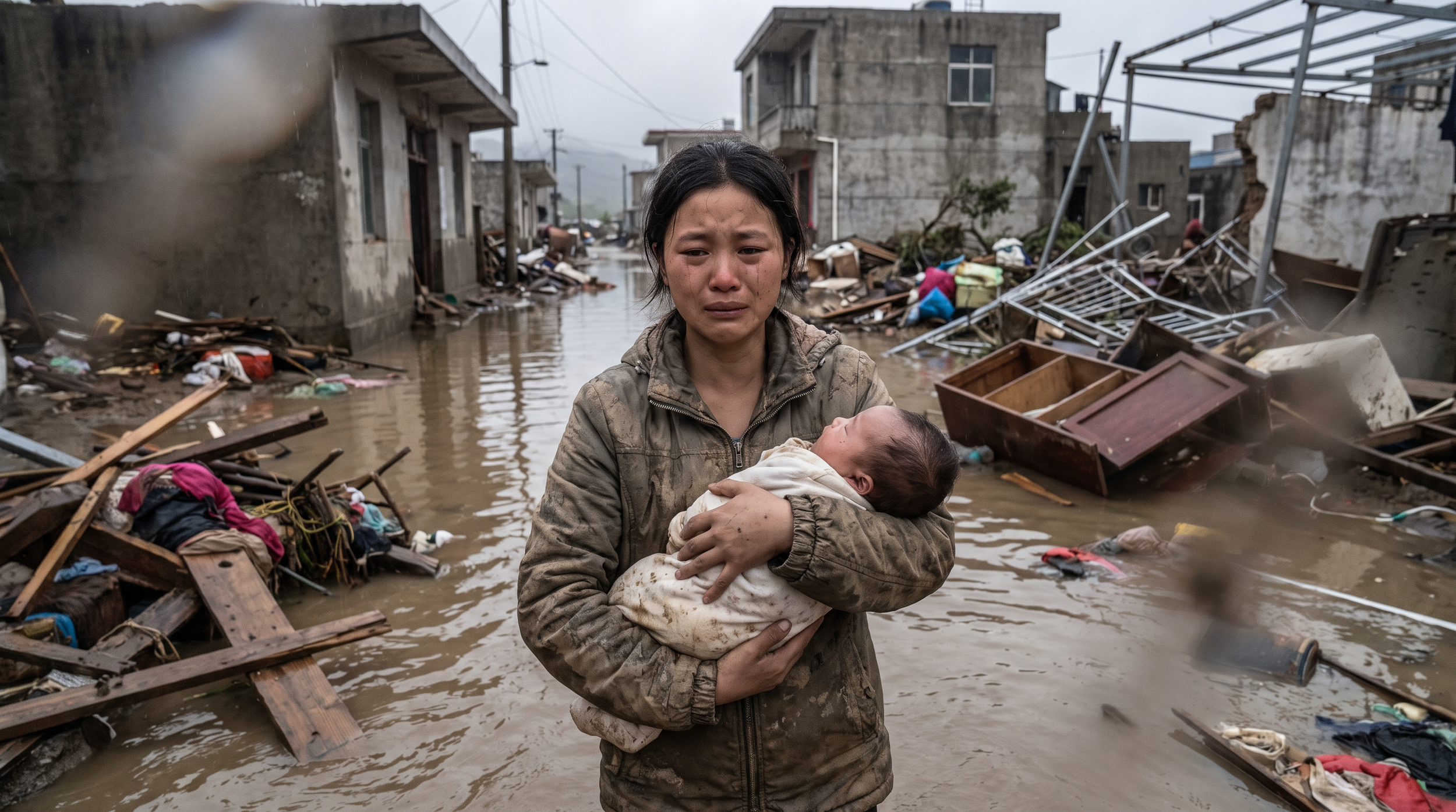
This photo? Still not real.
Prompt: “A photograph of a young mother with a sad expression, holding her baby on a flooded street, surrounded by the remnants of a tsunami that has devastated a distant country. The scene reflects ruin and despair, with the mother's face conveying deep pain and embodying the struggles faced by victims of such crises. The composition invites empathy, evoking a strong emotional response, suitable for humanitarian purposes. Ensure it appears realistic and unfiltered, with visible dirt on the lens to enhance the rawness of the moment.”
The No Hidden AI open letter.
Are you a humanitarian charity professional who believes trust is important?
Sign our open letter to the regulators.
To: Dame Julia Unwin (Chair, Charity Commission), David Holdsworth (CEO, Charity Commission), Lord Toby Harris (Chair, Fundraising Regulator), Gerald Oppenheim (CEO, Fundraising Regulator)
We, the undersigned, call on our sector regulators to protect public trust in charitable giving.
Generative AI is transforming how content is created. Without clear rules, the unlabelled use of fake content risks permanently damaging public belief in our sector.
We ask the Charity Commission and the Fundraising Regulator to work together to create regulations that require all registered charities to explicitly identify AI-generated content within fundraising materials.
Trust is our sector's most valuable asset. Help us protect it.